Should you learn German in a physical classroom or online? The honest answer is: it depends on your goals, schedule, and learning style. Both formats have real advantages and real drawbacks. This guide helps you decide which is right for your situation.
The Case for In-Person German Courses
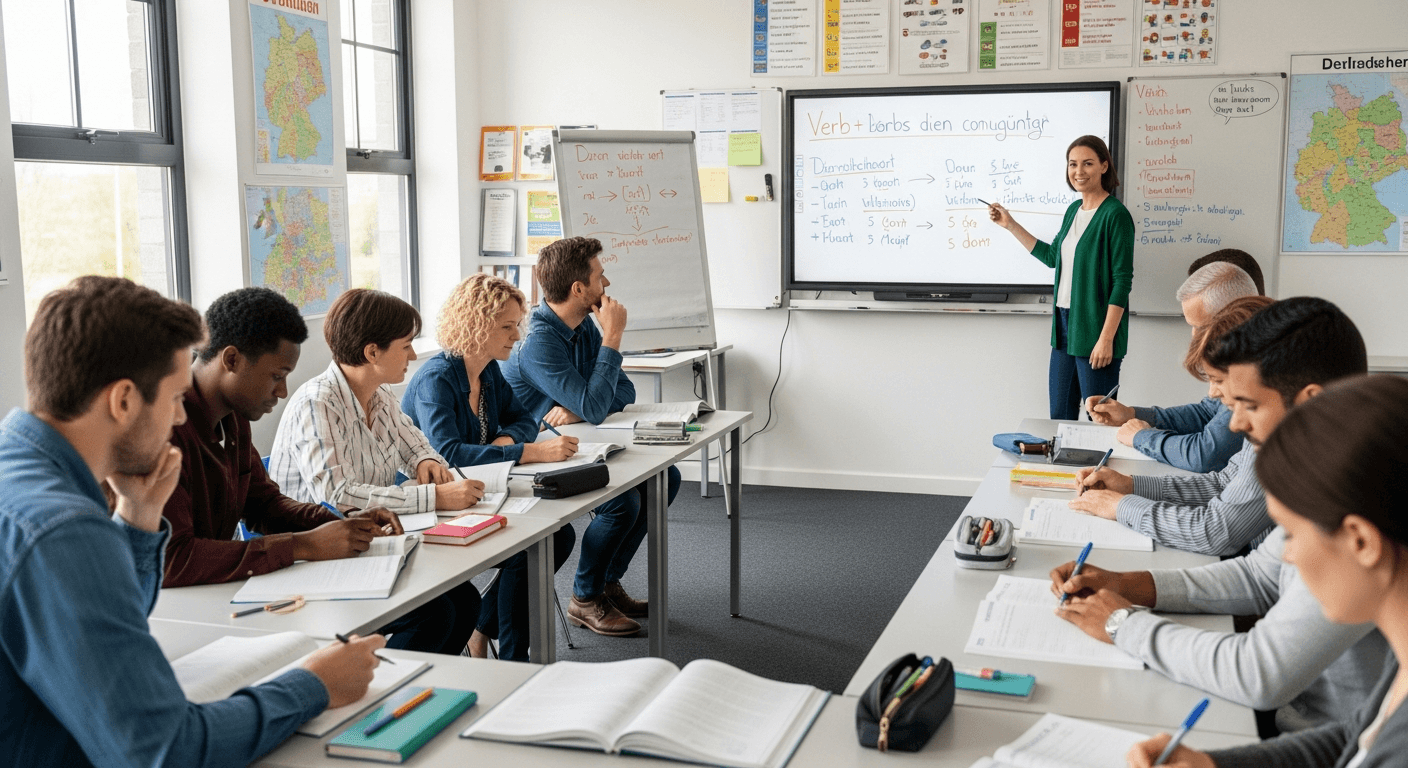
In-person courses offer structure, accountability, and social immersion — three factors that are enormously helpful for language learning. Being in a room with other learners and a teacher creates a natural context for practice: you have to speak, react in real time, and engage. Many people find that the social element of a classroom keeps them motivated in a way that solo online study does not.
For immigrants in Germany, in-person courses have an additional benefit: you are surrounded by other people navigating similar challenges. Language schools and VHS courses often become small communities where students share tips, experiences, and support. The Integrationskurs is almost always delivered in person (though hybrid options exist), and for good reason — the combination of intensive language practice and real-world social interaction is hard to replicate online.
The main drawbacks of in-person courses are inflexibility (fixed times that may clash with work or childcare) and geographic availability (rural areas may have fewer options). Costs can also be higher than online alternatives.
The Case for Online German Courses
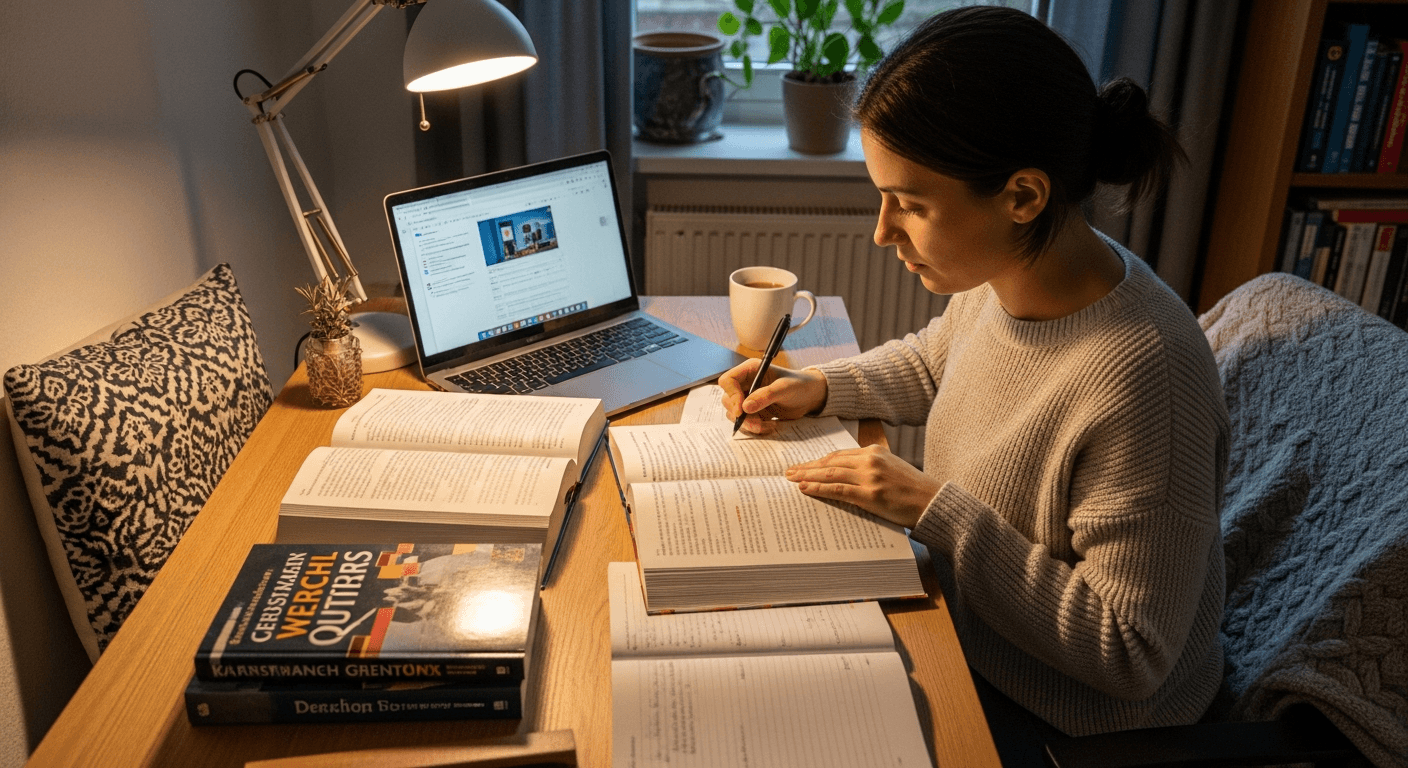
Online courses offer flexibility that in-person study simply cannot match. You can study at your own pace, on your schedule, from anywhere. This makes online learning ideal for busy professionals, parents with young children, people who travel frequently, or anyone in a location with limited local course options.
The quality of online German learning resources has improved dramatically. Live online lessons with professional tutors via platforms like italki or Preply give you personalised, interactive instruction at a fraction of the cost of a private in-person teacher. Platforms like Babbel offer structured grammar-based courses that work well as supplements. Deutsche Welle's free online courses (dw.com/learn-german) are genuinely high quality and cover A1 to B2. VHS institutions increasingly offer their courses online or in hybrid format.
The risks of online learning are discipline and speaking practice. Without the social pressure of a classroom, it is easy to skip sessions or stay in reading/listening mode and avoid the speaking skills you actually need for exams and real life.
Recommendations by Goal
If you are preparing for the Integrationskurs or a B1/B2 exam: combine an in-person or live online class for structure with self-study via DW or Schubert-Verlag for extra practice. If you are a busy professional who wants to progress: use italki for weekly live conversation sessions plus Babbel or Anki for vocabulary. If you are an absolute beginner with no German: in-person or live online with a teacher from the start gives you the best foundation — avoid apps-only approaches at this stage. If you are B2+ and want to maintain or advance your German: online resources, German-language media, and conversation groups are the most efficient options.
Choosing the right learning format is as important as choosing the right course provider. If you want a personalised recommendation based on your level, schedule, and goals, Sylum is happy to advise. Contact us at sylum.de/contact.